Screen Printing Emulsion: application, exposure & emulsion selection guide
Screen Printing Emulsion: application, exposure & emulsion selection guide

Team Texchem
Feb 24, 2026
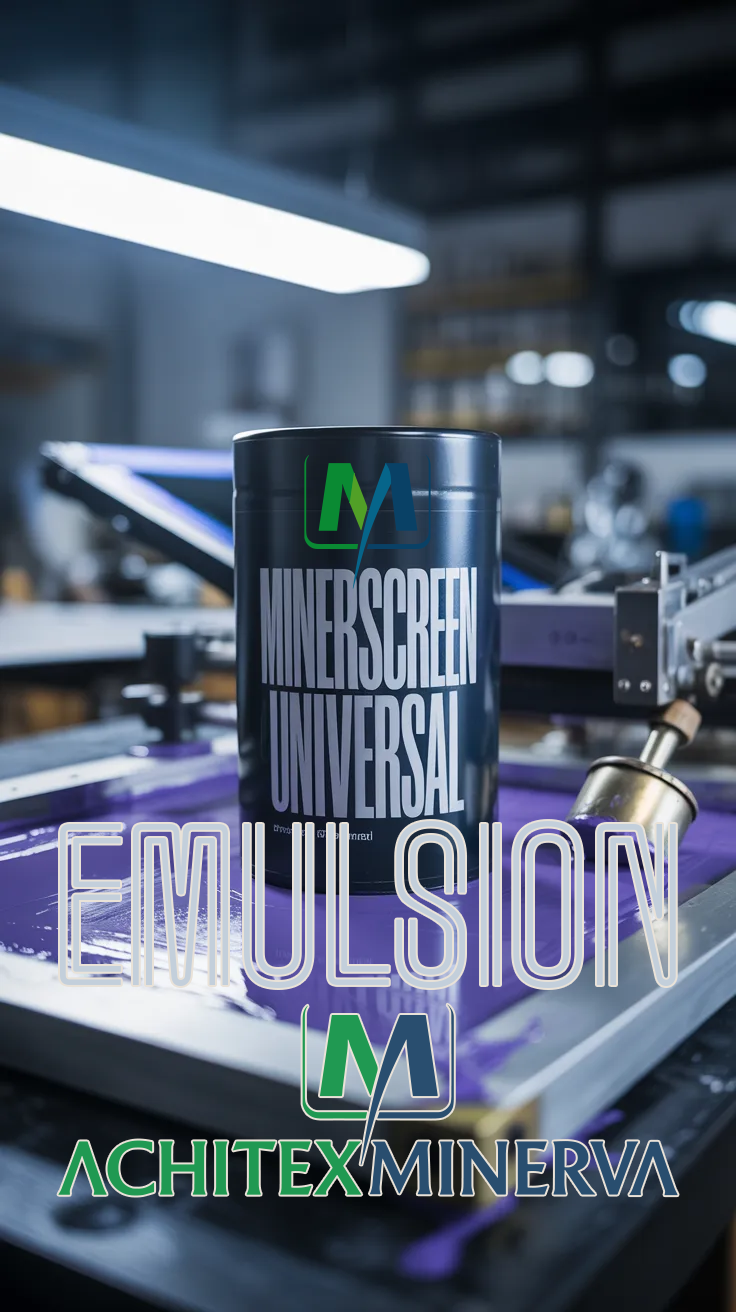
Emulsion (photo emulsion) is a fundamental material in the screen printing process, as it is the medium used to create the stencil on the screen frame. If you are involved in screen printing on fabric, paper, or other materials, proper understanding and application of emulsion directly affects print quality, screen durability, and design accuracy.
In this article we will examine:
- what emulsion is in screen printing
- how it is applied step by step
- key points of attention during the process
- how to choose the right emulsion
- useful tips for better results

What Is Emulsion in Screen Printing
Screen printing emulsion is a light-sensitive material that is coated onto the screen mesh. When exposed to ultraviolet (UV) light, it hardens in the areas that are exposed, while the areas covered by the design remain soft and are washed out. This process creates the stencil through which ink passes during printing.
In simple terms:
👉 emulsion transforms the screen into a printing matrix of the design
How Emulsion Is Applied to the Screen (Step by Step)
1. Cleaning and Degreasing the Screen
The screen must be completely clean from any ink residue, dust, and grease. Degreasing and removing any unwanted foreign particles helps the emulsion adhere properly to the mesh.
2. Mixing the Emulsion (if required)
Some emulsions are two-component systems and require an additional material called a sensitizer (diazo). These materials must always be mixed according to the manufacturer’s instructions.
3. Coating
Using a scoop coater, apply an even layer of emulsion to one or both sides of the screen.
4. Drying in Darkness
The screen must dry in a dark environment, free from humidity and dust. Proper drying is critical for stencil quality.
5. Exposure
The film positive containing the design is placed on the dried, emulsion-coated screen. The screen is then positioned in a properly prepared exposure unit and exposed to UV light. Due to the chemical composition of the emulsion, it hardens in the areas not covered by the film positive, while the covered areas remain soft and permeable.
6. Development (Washout)
Rinse the screen thoroughly with water. If the process has been carried out correctly, the desired design will appear clearly on the screen.

Key Points of Attention During Emulsion Application
- Uniform coating thickness → affects ink deposit and print performance
- Correct exposure time → underexposure results in stencil breakdown, overexposure makes washout difficult
- Clean environment → dust (a common issue) creates pinholes in the stencil
- Proper drying → high humidity reduces final stencil durability
- Appropriate mesh count → must be compatible with the selected emulsion
How to Choose the Right Screen Printing Emulsion
The selection of photo emulsion depends on:
1. Type of Ink
- Plastisol ink
- Water-based ink
- Solvent-based ink
👉 In each case, a different emulsion with the appropriate chemical resistance may be required.
2. Level of Design Detail
- High detail → fine-grain emulsion
- Large solid areas → thicker coating
3. Production Volume
- Small-scale production → ready-to-use emulsion
- Professional use → dual-cure / diazo emulsions
4. Stencil Durability
If printing large quantities, a high-durability emulsion is required.

Tips for Better Screen Printing Results
- Use fresh emulsion (it has a limited shelf life)
- Maintain stable temperature and humidity conditions during drying
- Perform a test exposure to determine the correct exposure time for your specific process
- Always store emulsion in a cool, dark place, avoiding direct sunlight
- Select emulsion according to the mesh count of the screen
Frequently Asked Questions About Screen Printing Emulsion
- How long does emulsion last after mixing?
Usually 4–8 weeks when stored in a refrigerator (depending on the type).
- Why does the design not wash out?
Possible overexposure or an excessively thick coating.
- Why does the stencil break down during printing?
Underexposure or improper drying of the emulsion.
Conclusion
Emulsion in screen printing is critical for print quality and screen durability. With proper selection of photo emulsion, correct application, and controlled exposure, you can achieve clean, durable, and professional screen printing results.